

AAC Cable Electrical is one of the most widely used conductors for overhead power transmission and distribution networks. Made entirely of high-purity aluminium, AAC cables provide excellent electrical conductivity, lightweight design, and long-term durability. These cables are designed for low to medium voltage applications and are ideal for urban and rural electricity distribution, temporary power supply, and replacement of aging overhead lines. Their all-aluminium construction ensures corrosion resistance, reduced energy losses, and cost-effectiveness compared to other conductor types.
In addition to their mechanical and electrical advantages, AAC Cable Electrical offer flexibility in installation and long-term reliability under various environmental conditions. They are suitable for short to medium span applications and can withstand the mechanical stress and environmental challenges commonly encountered in overhead power lines. Engineers and procurement professionals rely on AAC cables for their predictable performance, ease of maintenance, and compliance with international standards.
AAC Cable Electrical: Specs, Advantages & Uses for Overhead Power
In this guide, we will explain the construction, specifications, advantages, types, applications, installation guidelines, and selection of AAC cables electrical to help you make informed decisions for your overhead power projects.
Overhead power transmission relies heavily on reliable and efficient conductors. Among these, AAC cable electrical has emerged as a widely used solution for distributing electricity. In this detailed guide, we will explore what AAC cables are, their construction, advantages, types, applications, installation, and comparisons with other conductors. This content is aimed at engineers, procurement managers, and infrastructure professionals seeking detailed insights into AAC cables for overhead power systems.

What is AAC Cable Electrical?
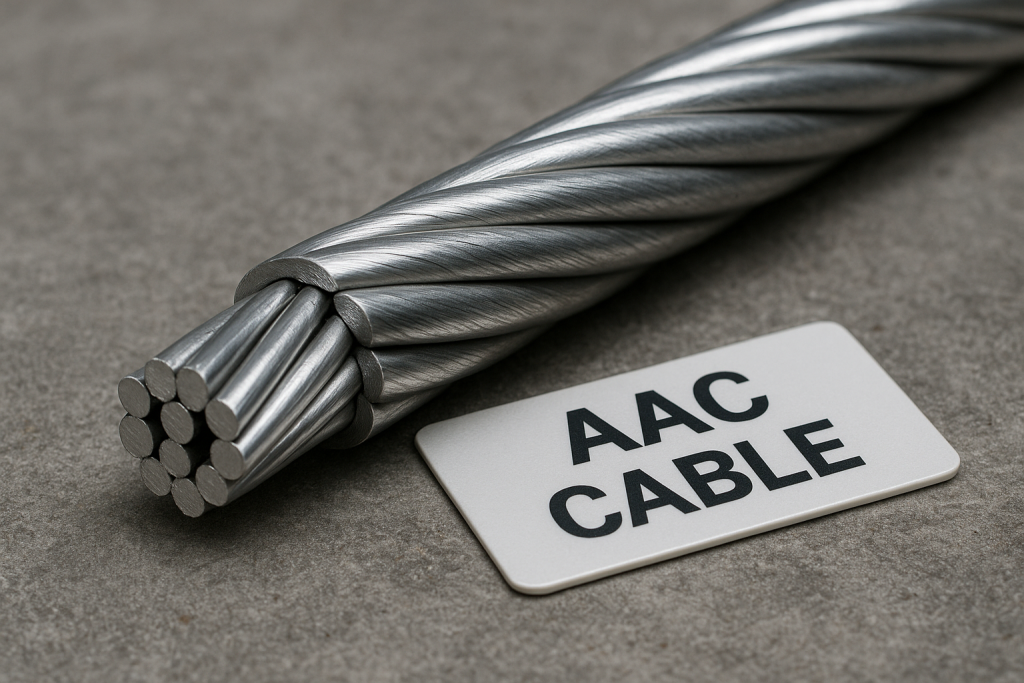
AAC (All Aluminium Conductor) cables are uncoated overhead conductors used for power transmission and distribution. They consist entirely of high-purity aluminium strands, providing excellent conductivity and mechanical strength.
Key Characteristics of AAC Cables:
- Made of 100% pure aluminium
- Lightweight compared to steel-reinforced conductors
- Suitable for short to medium span transmission
- Resistant to corrosion in normal atmospheric conditions
AAC cables are primarily used in urban and rural areas where the spans between poles are relatively short, making them ideal for low- to medium-voltage overhead lines.
Construction and Specifications of AAC Cables
Construction
AAC cables are composed of multiple strands of aluminium twisted together in a concentric arrangement. This construction provides flexibility and uniform current distribution across the conductor.
Components include:
- Aluminium Strands: High-purity aluminium (minimum 99.5% conductivity)
- Concentric Layering: Strands are laid in layers to achieve the desired diameter and current-carrying capacity
Specifications
When selecting AAC cables, several specifications are critical:
- Cross-sectional area: Common sizes range from 10 mm² to 400 mm²
- Current carrying capacity: Varies with cable size, temperature, and installation environment
- Diameter: Defined according to standard requirements to ensure uniformity
- Mechanical strength: Sufficient to withstand tension during installation and environmental loads
Standards:
- IEC 61089
- IS 398 (India Standard for overhead conductors)
Advantages of AAC Cable Electrical
AAC cables offer several benefits for overhead power lines:
High Conductivity
Pure aluminium strands ensure minimal energy loss during transmission.
Lightweight
- Easier handling and installation
- Reduced stress on poles and supporting structures
Cost-Effective
- Lower initial cost than steel-reinforced conductors
- Reduced maintenance and replacement costs
Corrosion Resistance
Aluminium naturally forms a protective oxide layer, reducing susceptibility to environmental corrosion.
Flexibility
AAC cables can be bent and twisted without breaking, simplifying installation over short and medium spans.
Types of AAC Cables
There are several types of AAC cables, classified based on construction and application:
- Standard AAC Conductor
- Used for conventional low- to medium-voltage lines
- Simple concentric strand design
- AAC-XLPE
- Aluminium core with XLPE insulation for enhanced protection
- Suitable for regions with higher environmental stress
- AAC with Annealed Strands
- Strands undergo annealing for improved flexibility
- Ideal for areas with frequent mechanical stress
Applications and Uses of AAC Cable Electrical
AAC cables are widely used in the electricity distribution network.
Typical Applications:
- Urban Overhead Distribution: Ideal for short-distance urban connections
- Rural Electrification: Used in low-voltage rural power lines
- Industrial Facilities: Power supply lines within industrial plants
- Temporary Power Lines: Construction sites and temporary installations
Advantages in Applications:
- Efficient transmission over short to medium spans
- Easy installation and low maintenance
- Reliable performance under normal weather conditions
Installation Guidelines for AAC Cables
Proper installation is critical to ensure safety and longevity of AAC cables.
Step-by-Step Guidelines:
- Route Planning
- Identify pole positions and span lengths
- Check for obstacles or high-wind areas
- Tensioning
- Avoid excessive tension to prevent conductor sag
- Maintain recommended tension values as per standards
- Supporting Structures
- Poles must support weight and environmental loads
- Use proper insulators for secure attachment
- Connection
- Use compression or mechanical connectors designed for aluminium conductors
- Ensure proper contact to reduce energy loss
- Inspection
- Conduct post-installation inspections for sag, alignment, and damage
AAC Cable vs ACSR and AAAC
Understanding differences between AAC, ACSR, and AAAC cables helps in selecting the right conductor:
| Feature | AAC | ACSR | AAAC |
|---|---|---|---|
| Material | 100% Aluminium | Aluminium + Steel | Aluminium Alloy |
| Weight | Light | Heavier | Moderate |
| Conductivity | High | Moderate | High |
| Mechanical Strength | Moderate | High | High |
| Span Length | Short to Medium | Long | Medium to Long |
| Corrosion Resistance | Excellent | Moderate | Good |
Summary:
- AAC is ideal for short to medium spans with low to moderate mechanical load.
- ACSR is suited for long spans where high tensile strength is needed.
- AAAC combines high conductivity with better corrosion resistance for harsh environments.
How to Choose the Right AAC Cable?
Selecting the correct AAC cable depends on several factors:
- Current Load
- Determine maximum current the cable needs to carry
- Span Length
- Short spans: AAC
- Long spans: Consider ACSR
- Environmental Conditions
- High corrosion areas: AAAC may be preferable
- Normal urban conditions: AAC works efficiently
- Budget
- AAC provides cost-effective solutions for most distribution lines
Tip: Always check local standards and compliance requirements before purchasing cables.
Where to Buy AAC Cable Electrical?
HNBFpower is a reliable supplier of AAC cable electrical for international clients.
Why choose HNBFpower:
- High-quality pure aluminium conductors
- Compliance with IEC and other international standards
- Wide range of AAC cable sizes and types
- Global shipping and B2B support
Contact HNBFpower through HNBFpower website for purchasing inquiries and technical assistance.
Maintenance and Longevity of AAC Cables
Proper maintenance ensures long life and safe operation of AAC cables:
Maintenance Tips:
- Regular Inspection: Check for sagging, corrosion, or physical damage
- Cleaning: Remove accumulated dirt or debris on conductors
- Tighten Connections: Ensure connectors remain secure to prevent energy loss
- Environmental Monitoring: Address exposure to pollution or high moisture
Expected Lifespan:
With proper installation and maintenance, AAC cables can last 25–30 years in typical overhead distribution networks.
FAQs
1. What does AAC stand for in electrical cables?
- AAC stands for All Aluminium Conductor, a bare overhead conductor made entirely of high-purity aluminium strands, used for electricity transmission and distribution.
2. What are the typical specifications of an AAC cable?
- Material: 1350-H19 aluminium
- Cross-section: 8 mm² to 400 mm²
- Voltage rating: up to 33 kV
- Stranding: multiple aluminium strands for flexibility and mechanical strength
3. How does AAC cable differ from ACSR and AAAC?
- AAC: Pure aluminium, moderate tensile strength, high conductivity, cost-effective
- ACSR: Aluminium + steel core, high tensile strength, suitable for long spans
- AAAC: Alloy aluminium, moderate strength, highly corrosion-resistant
4. What are the main advantages of AAC cables?
- High electrical conductivity
- Lightweight for easier installation
- Cost-effective compared to copper
- Corrosion-resistant and durable
- Environmentally friendly and recyclable
5. What types of AAC cables are available?
- Standard AAC: General-purpose
- AAC/TW (Thermal Wire): High-temperature environments
- AAC/HT (High Tensile): Long spans and mechanical loads
6. Where are AAC cables commonly used?
- Urban electricity distribution networks
- Rural and semi-urban overhead lines
- Temporary construction site power supply
- Replacement of ageing overhead conductors
7. How should AAC cables be installed for maximum efficiency?
- Maintain proper sag and tension
- Use appropriate clamps and insulators
- Avoid sharp bends to prevent strand stress
- Follow national electrical safety standards
8. What factors should engineers consider when selecting AAC cables?
- Current carrying capacity and load requirements
- Span length and mechanical strength needed
- Environmental conditions (corrosion, temperature)
- Voltage rating and regulatory compliance
9. How long do AAC cables typically last?
- With proper maintenance, AAC cables can last 20–30 years, depending on environmental conditions and load cycles.
10. Where can procurement professionals buy reliable AAC cables?
- Trusted suppliers like HNBFpower provide certified AAC cables, technical support, custom sizing, bulk orders, and compliance with international standards for overhead power transmission.
Summary
In summary, AAC cable electrical stands out as a practical and reliable solution for overhead power transmission and distribution. Constructed entirely from high-purity aluminium strands, these conductors combine excellent electrical conductivity with lightweight properties, making them ideal for short to medium-span installations. The simple yet effective concentric design ensures uniform current distribution, while the natural corrosion resistance of aluminium enhances the lifespan of the cable in typical urban and rural environments.
AAC cables offer multiple advantages over other types of overhead conductors, including easier handling, lower installation costs, and reduced structural load on poles. They are widely used across urban power distribution networks, rural electrification projects, industrial plants, and temporary power setups due to their efficiency, flexibility, and cost-effectiveness. Understanding the differences between AAC, ACSR, and AAAC cables helps engineers and procurement managers choose the right solution based on span length, mechanical load, and environmental conditions.
For international clients seeking high-quality AAC cables, HNBFpower provides a comprehensive range of products that comply with global standards, ensuring reliable performance and durability. Proper installation, regular inspection, and maintenance are essential to maximize the service life of AAC conductors, which can extend up to 25–30 years. Ultimately, AAC cables remain a trusted choice for delivering safe, efficient, and cost-effective power across various overhead electrical networks worldwide.