

ABC cable technology improving safety over bare conductors is one of the most important developments in modern power distribution. For decades, utilities around the world relied on bare conductors to transmit electricity, but these exposed wires often created serious hazards.
From accidental electrocution and fire risks to frequent outages and power theft, bare conductors continue to pose challenges for communities and network operators. Aerial Bundled Cable (ABC) was introduced as a practical solution to these problems.
Unlike bare wires, ABC cables are insulated and bundled, which significantly reduces accidents, minimizes faults caused by contact with trees or animals, and helps curb electricity theft. This makes ABC a safer, more reliable, and cost-effective alternative for both urban and rural distribution networks.
For power companies, municipalities, and contractors, the transition to ABC means fewer maintenance issues, reduced downtime, and stronger protection for people and property.
ABC Cable Technology Improving Safety Over Bare Conductors
In this guide, we will explain how ABC cable technology improves safety over bare conductors and why it is the right choice for modern power networks.
The Hidden Dangers of Bare Power Lines
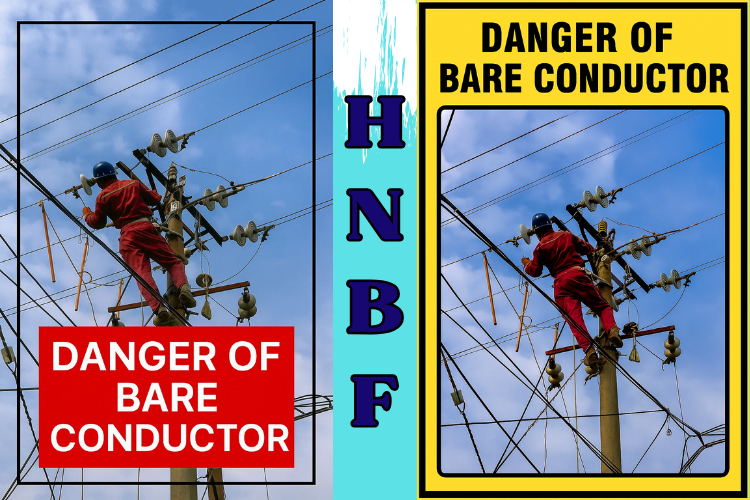
Image: A lineworker installs overhead bundled conductors. Bare overhead wires pose serious risks. Untouched, exposed conductors can arc or energize nearby objects, leading to injuries, fires, and outages. Key hazards include:
- Electrocution and injury: Contact with live bare wires is a leading cause of electrical fatalities. For example, U.S. data show overhead line contact caused dozens of worker deaths per year. Exposed lines threaten anyone from construction crews to farmers – often with fatal results.
- Forest fires: In dry climates, a fallen bare wire touching branches can spark wildfires. Australian utilities saw repeated bushfires from bare lines touching trees; replacing them with insulated cables “offers improved supply reliability and reduced risk of fire ignition”.
- Frequent faults and outages: Wind, animal contact, or debris can short bare phases together, tripping lines. Studies report ABC networks suffer roughly 60% fewer fault incidents than bare-wire lines. In contrast, bare lines in vegetated areas can short during storms, causing rolling blackouts.
- Power theft: Illegal tapping of bare low-voltage lines is easy. In regions with rampant energy pilferage, up to 90% of losses have been attributed to hook-ups on exposed conductors. A Karachi utility found theft dropped by about 90% after converting problematic feeders to insulated ABC cable.
- Maintenance burden: Bare lines demand constant tree trimming and repairs. Every year utilities pay millions trimming corridors and fixing storm damage. By contrast, insulated overhead conductors require far less vegetation clearance.
Utilities, municipal grid operators, and infrastructure engineers face these daily challenges. Left unchecked, bare conductors on poles become a public safety nightmare, liability risk, and reliability drain. As one California study noted, covered conductors (like ABC) can mitigate six of ten major hazards faced by bare lines – including vegetation contact, wind-slap, animal damage, and public injuries.
The ABC Cable Advantage
Aerial Bundled Cable (ABC) is engineered specifically to address these issues. ABC consists of multiple insulated phase conductors bundled together (often with an insulated or bare neutral) into one overhead assembly. Unlike a single bare wire per phase, each ABC conductor has its own XLPE insulation. This design delivers critical safety benefits:
- Shock prevention: Each phase is fully insulated to IEC/NFC/ASTM standards. This means accidental contact with a phase does not immediately become a live-wire hazard. As one manufacturer explains, “each conductor is individually insulated… preventing accidental contact and electric shock”.
- Arc reduction: Bundled insulation eliminates phase-to-phase short circuits caused by wind or falling limbs. Conventional bare conductors can touch and spark; ABC won’t arc over when conductors move together, so it nearly eliminates faults from loose wires. Indeed, industry data indicate ABC systems can achieve about 60% fewer faults than equivalent bare-line spans.
- Fire resistance: Many ABC cables use flame-retardant, low-smoke polyolefin insulation. This greatly limits fire ignition and smoke output if a fault does occur. Utilities in fire-prone regions rely on ABC to reduce spark risks: one utility report notes ABC “offers… reduced risk of fire ignition” in heavy brush areas.
- Anti-theft design: It’s far harder to tap insulated cables unnoticed. The insulating sheath makes illegal hooks obvious and difficult. In practice, utilities see theft plunge.
- Lower maintenance: Because ABC won’t spark on trees, vegetation clearance is minimal. One Australian analysis notes that with ABC “little to no tree trimming” is required. Reduced fault frequency also means fewer emergency repairs and outages. Over its 30+ year life, an insulated bundle needs only routine inspection versus the continuous upkeep bare lines demand.
In sum, ABC cables bundle protection and reliability into the overhead network. They let grid operators string up lines without the endless trimming and outage cycles bare wires cause.
Proven Case Studies & Data (Safety & Performance)
Real-world deployments confirm ABC’s benefits. Across the globe, utilities have documented substantial safety and reliability gains after switching to ABC:
- India (Low-Voltage Network): The Indian power sector’s Loss Reduction Report highlights that installing LV ABC delivers “total elimination of faults on LT lines,” greatly improved reliability, and “avoidance of theft”. In practice, states using ABC saw network losses and hooking drop sharply.
- Karachi, Pakistan (Theft Reduction): In 2014, K-Electric piloted ABC in high-theft neighborhoods of Karachi. The project slashed electricity theft by roughly 90%, a transformational result that prompted a citywide rollout of insulated cables.
- Australia (Bushfire Mitigation): United Energy (Victoria) analyzed its 22kV network and found bare overheads caused repeated faults and bushfire ignitions. They noted: “HV ABC was used to replace bare overhead conductors… Replacement with insulated cables offers improved supply reliability and reduced risk of fire ignition”. ABC sections saw far fewer line-to-line faults in bushfire zones. Despite some older ABC needing upgrades, the conversion was credited with dramatically curbing vegetation-caused fire starts.
- California, USA (Safety Hardening): A 2021 study for California utilities evaluated “covered conductors” (essentially ABC). Experts concluded that covered cables mitigate six out of ten hazards that bare wires face – including tree contact, wind slapping, animal impact and public/worker strikes. Moreover, networks worldwide report fewer wildfires and improved reliability wherever insulated overheads replace bare lines. One finding: arcing (the main bare-conductor failure) “was largely mitigated with CCs,” meaning ignition risk drops sharply.
- General Reliability: Studies and vendor data consistently show ABC-backed networks enjoy fewer outages. For example, a Chinese industry analysis claims ABC “reduce[s] fault incidents by 60%” compared to bare lines. Correspondingly, utilities report sustained reliability gains: one cable manufacturer notes ABC networks have “improved reliability in comparison with… bare conductor systems” and can “maintain supply temporarily even if a support structure collapses”.
- Maintenance and Costs: All these improvements translate to dollar savings. Fewer faults mean reduced overtime repairs. Less trimming and no golden-yellow broadcast wires (used to warn of phase) save crews time. An NFPA report found cable-related electrical fires dropped 45% in areas with strict maintenance – a benefit ABC can enhance. Cutting losses also boosts revenue (e.g. the Australian utility avoided ~$3.7M in penalties from ABC faults).
Taken together, the data are compelling: overhead distribution networks become safer and more reliable when using ABC. Accidents, service interruptions, and theft all trend sharply downward.
Who Benefits from ABC Cables?
ABC cable technology is especially relevant to anyone overseeing or building overhead power lines:
- Power Utilities & Grid Operators: From urban feeders to rural mini-grids, utility engineers see immediate safety gains. National and state utilities (e.g. China State Grid, Kenya Power) already use ABC to protect their networks. ABC is vital in bushfire-prone areas, crowded cities, and high-theft regions. Distribution planners and safety officers will find ABC an easy upgrade to meet regulatory and insurance requirements.
- Municipalities & Rural Electrification Agencies: City or regional governments managing street lighting and neighborhood supplies can cut public risk by switching to ABC. In villages or remote areas, ABC extends overhead service safely, reducing the need for costly underground lines. The smaller right-of-way footprint and minimal tree cutting also suit eco-sensitive zones.
- Industrial and Commercial Developers: Factories, campuses, and resorts with private overhead networks benefit too. Insulated cables mean fewer shutdowns from local wildlife or storms – a boon for operations like factories (which lose millions per hour of downtime) or oil fields (e.g., Red Sea Oil, another HNbfpower customer). Safety compliance is simpler, as ABC complies with international standards (CEI, IEC, etc.) for overhead lines.
- Contractors and EPC Firms: Engineering and construction firms installing new lines will find ABC easier to handle. The bundled design often cuts the number of support poles needed, reducing civil works. While ABC is slightly higher unit cost than bare conductor, the simpler installation (no crossarms or elaborate insulators) and lower lifecycle cost make it attractive for project bids. And installers appreciate that energized work on ABC is less perilous for linemen.
- Regulatory Bodies and Safety Agencies: Any organization setting power-safety codes or grants for grid upgrades should note ABC’s benefits. Indeed, Indian regulators explicitly list LV ABC installation as a loss-reduction measure. In safety-focused markets like California and Australia, industry plans are now prioritizing ABC in fire-hazard zones.
In short, the target audience covers utility managers, procurement leaders, project engineers, and public safety officials in the power sector. If you manage overhead distribution lines or procurement for power networks, ABC cable is the clear solution to age-old safety and reliability problems.
HNbfpower’s ABC Cable Solutions
For those decision-makers, HNbfpower offers high-quality Aerial Bundled Cable products tailored to these needs. HNbfpower’s ABC cables meet international IEC/NFC/ASTM standards for overhead insulated conductors. Each cable assembly contains multiple aluminum-conductor cores with XLPE insulation, tightly jacketed and messengered for strength. These cables are rated up to 0.6/1 kV (suitable for local distribution) and can be used on street light feeders, construction site power lines, or any low-voltage overhead network.
Key features of HNbfpower’s ABC cables:
- Fully Insulated Conductors: Every phase and neutral (if insulated) is sheathed in durable polymer, eliminating exposed live wires on poles.
- Resistant Jacket: The cable bundle is wrapped with a UV- and flame-resistant coating to withstand sun, rain, and fire events.
- Compact Design: By bundling three phases (and neutral) together, these cables require narrower clearances and often fewer poles than separate bare conductors.
- Compliance: HNbfpower’s products carry CE and ISO certifications, and they supply to major utilities worldwide.
HNbfpower’s case studies reflect the general experience: customers see improved uptime and safety. For example, utilities such as NGCP (Philippines) and Kenya Power rely on HNbfpower cables for critical lines. These cables come with technical support for installation, plus guidance on best practices (as outlined above) to ensure trouble-free operation.
If your project involves overhead distribution, consider HNbfpower’s ABC solution. Our team can provide specifications, conduct site assessments, and offer support on routing and terminations. We also supply the necessary hardware (insulators, clamps) to complete the system. In one testimonial, a regional power authority noted that switching to HNbfpower’s ABC allowed them to “sustain higher reliability and eliminate theft incidents,” echoing the industry benefits discussed here.
Taking Action: Switch to ABC for a Safer Grid
Don’t wait for the next outage or accident. Upgrading bare lines to ABC is a one-time project that pays dividends in safety, reliability, and cost savings. Here are steps to move forward:
- Audit Your Lines: Identify sections of your network most vulnerable (high vegetation, populated areas, theft hotspots) and calculate the costs of outages and losses there.
- Consult with Experts: Engage HNbfpower’s engineering team to select the right ABC cable profile and insulation class for your voltage and climate.
- Plan the Replacement: Coordinate with your field crews or contractors for a phased ABC installation – often you can do “string and energize” without total shutdowns, thanks to ABC’s design.
- Train Maintenance Staff: Even with ABC, regular inspections are needed. HNbfpower can train your linemen on the unique aspects of handling insulated conductors safely.
- Monitor Gains: Track fault and theft metrics after installation to quantify ABC’s impact on safety and losses.
Thousands of miles of power lines across the world have made the switch; you can too. HNbfpower stands ready to support your transition to the newest overhead technology. Our Aerial Bundled Cables deliver proven protection against the dangers of bare conductors.
Contact HNbfpower today to learn more or request a quote on ABC cable kits. Improve your grid’s safety and reliability – the data and case studies speak for themselves. Make the change from bare wires to bundled safety, and give your community and workforce the protection they deserve.