

AAC Cable is one of the most widely used conductors in the power transmission industry due to its efficiency, corrosion resistance, and cost-effectiveness. As global electricity demand rises every year, the importance of dependable conductors that can support long-distance transmission cannot be overstated.
Power utilities, infrastructure planners, and engineers are constantly faced with the challenge of identifying a conductor type that ensures stability, reduces losses, and offers a balance between installation cost and long-term efficiency.
AAC, or All Aluminium Conductor, is built entirely from aluminium strands, giving it high electrical conductivity while remaining lightweight and easier to install compared to other conductor types.
It is often used in urban areas, short-to-medium span networks, and coastal regions where corrosion resistance is critical. At the same time, selecting AAC for longer spans or higher loads requires a thoughtful review of mechanical performance, compliance with international standards, and long-term maintenance considerations.
Choosing wisely can mean the difference between reliable performance and costly inefficiencies.
AAC Cable How to Pick the Right One for Long-Distance Power Lines
In this guide we will explain Power transmission over long distances is a crucial part of modern infrastructure. Choosing the right type of conductor ensures efficiency, safety, and longevity of the transmission system. Among the widely used conductors, All Aluminum Conductor (AAC) cables are a standard choice for many overhead power lines. They are lightweight, corrosion-resistant, and cost-effective for certain types of projects. However, selecting the correct AAC cable requires careful analysis of technical, mechanical, and environmental factors. In this guide, we will cover everything you need to know to make an informed decision.
Understanding AAC Cables
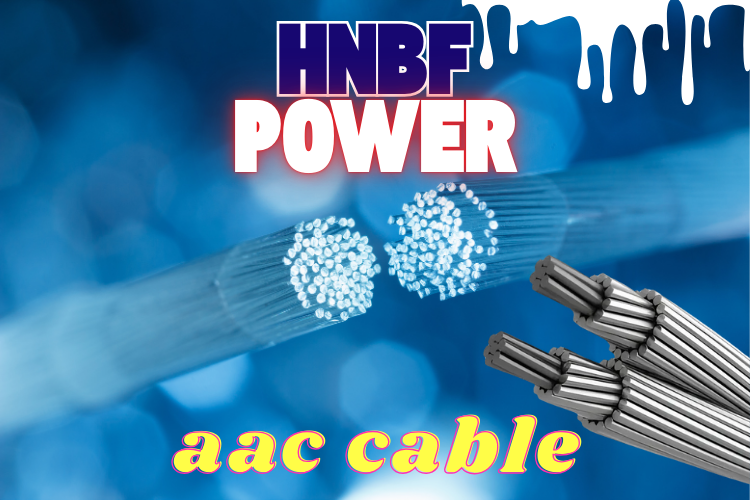
All Aluminum Conductor (AAC) cables are made entirely of aluminum and are designed specifically for overhead power lines. Unlike other conductors such as ACSR (Aluminum Conductor Steel Reinforced), which include a steel core for extra strength, AAC relies solely on aluminum. This makes the cable lightweight and easier to handle but limits its mechanical strength.
Material Composition
The aluminum used in AAC cables is usually 1350-H19 grade, which provides a good balance of conductivity and ductility. The high-purity aluminum ensures low resistance and efficient power transmission over moderate distances. It is crucial to select cables that adhere to international standards such as ASTM B230 and ASTM B231 to guarantee quality, consistency, and performance.
Construction
AAC cables are constructed by stranding multiple aluminum wires concentrically around a central core. This design increases flexibility while maintaining adequate electrical conductivity. Depending on the required current-carrying capacity and voltage level, cables can have varying numbers of strands and different overall diameters.
- Single-layer stranded cables: Simpler design, often used in short-distance transmission or distribution lines.
- Multi-layer stranded cables: Provide better mechanical stability and flexibility, suitable for longer spans.
Electrical Properties
The primary purpose of any conductor is to transmit electricity efficiently. Aluminum has a slightly lower conductivity compared to copper, but its lighter weight and lower cost make it a preferred option for certain applications. AAC cables typically carry medium voltage lines and are suitable for distances where voltage drop is not a major concern. For very long-distance transmission, it is essential to calculate the cable size to minimize power loss.
Advantages of AAC Cables
- Lightweight and easy to install.
- Corrosion-resistant in normal atmospheric conditions.
- Lower cost compared to copper conductors.
- Compliant with recognized standards, ensuring reliability.
Limitations of AAC Cables
- Lower tensile strength than ACSR or AAAC (All Aluminum Alloy Conductor).
- Not suitable for areas with extreme mechanical stress, such as long spans without supports or regions prone to heavy ice loading.
- Voltage drop becomes significant over very long distances if the cable size is not properly calculated.
Key Considerations for Long-Distance Transmission
When planning a long-distance transmission line using AAC cables, there are several technical and environmental factors to consider. These factors determine the cable’s performance, lifespan, and safety.
1. Electrical Conductivity and Voltage Drop
Resistance in the conductor leads to voltage drop and energy loss over long distances. Although aluminum is less conductive than copper, its lower weight allows for easier installation of larger conductors to compensate.
How to calculate voltage drop:
Voltage drop (Vd) in a line can be calculated using the formula: Vd=I×R×LVd = I \times R \times LVd=I×R×L
Where:
- III = Current in amperes
- RRR = Resistance per unit length (ohms/km)
- LLL = Length of the conductor (km)
By selecting a larger cross-sectional area, voltage drop can be minimized. For long-distance transmission, engineers typically select the conductor size to ensure voltage drop remains below 3–5% of the nominal voltage.
2. Mechanical Strength and Sag
One of the primary challenges of long-distance overhead transmission is maintaining mechanical integrity. AAC cables have a lower tensile strength than steel-reinforced conductors, which means sag can become an issue over long spans.
- Sag calculation: The sag (S) can be approximated using the catenary formula:
S=wL28TS = \frac{wL^2}{8T}S=8TwL2
Where:
- www = weight per unit length of the cable
- LLL = span length between supports
- TTT = tension in the cable
Proper tensioning and support placement are critical to prevent excessive sag, which can cause clearance issues or mechanical failures.
3. Environmental Considerations
Environmental factors play a crucial role in cable selection:
- Temperature: Aluminum expands and contracts with temperature changes. Proper tension adjustments are required to avoid overstressing the cable.
- Corrosion: AAC cables are naturally corrosion-resistant in typical atmospheric conditions. However, in coastal or industrial areas, additional protection or specialized alloys may be necessary.
- UV Exposure: Prolonged exposure to sunlight can degrade insulation materials (if used) and accelerate wear in accessories, though bare AAC conductors are generally resistant.
4. Installation and Maintenance
AAC cables are lightweight, which reduces installation complexity. However, attention must be paid to:
- Handling: Aluminum is softer than steel and can deform if mishandled.
- Connections: Proper termination is required to prevent overheating and corrosion at connection points.
- Maintenance: Regular inspection for sag, corrosion, and mechanical wear is recommended, especially in areas with extreme weather.
5. Cost-Effectiveness
AAC cables are generally cheaper than alternatives like ACSR or copper conductors. While upfront costs are lower, engineers must consider long-term performance, including maintenance, potential replacement, and energy loss due to voltage drop. Balancing cost and performance ensures efficient and economical power transmission.
Case Study: Urban Power Grid Upgrade
Although we are not describing a specific project, it is essential to note that real-world applications consistently show the importance of selecting the right AAC cable based on local conditions. Engineers assess:
- Environmental conditions (temperature, humidity, wind, corrosion potential)
- Required electrical capacity (current, voltage, distance)
- Mechanical constraints (span length, tension, sag)
- Regulatory compliance and safety standards
By analyzing these factors, utilities ensure long-term reliability and cost-effectiveness for their transmission lines.
Conclusion
Selecting the right AAC cable for long-distance power transmission requires careful consideration of multiple factors. Understanding the properties of AAC cables, evaluating mechanical and electrical requirements, and accounting for environmental conditions ensures that the conductor performs reliably over its intended lifespan.
Key takeaways for choosing AAC cables:
- Know your load and distance: Ensure the selected cable size minimizes voltage drop and energy loss.
- Evaluate mechanical requirements: Calculate sag and tension to maintain safe operation.
- Consider environmental factors: Account for temperature, corrosion, and UV exposure.
- Balance cost with performance: Ensure long-term efficiency rather than focusing solely on initial costs.
- Follow standards and best practices: Compliance with ASTM, IEC, or local regulations ensures quality and reliability.
By following these guidelines, engineers and planners can select AAC cables that are both efficient and durable, making them suitable for long-distance power transmission projects.